Case Study: Building the Nervous System of a Modern Metropolis
Executive Summary
The City of NeoVeridia had a bold vision: to become the most sustainable and livable city in Europe by 2030. However, their existing infrastructure was a patchwork of siloed legacy systems. Traffic lights operated on fixed timers regardless of congestion, streetlights burned electricity in empty streets, and waste collection trucks followed inefficient static routes.
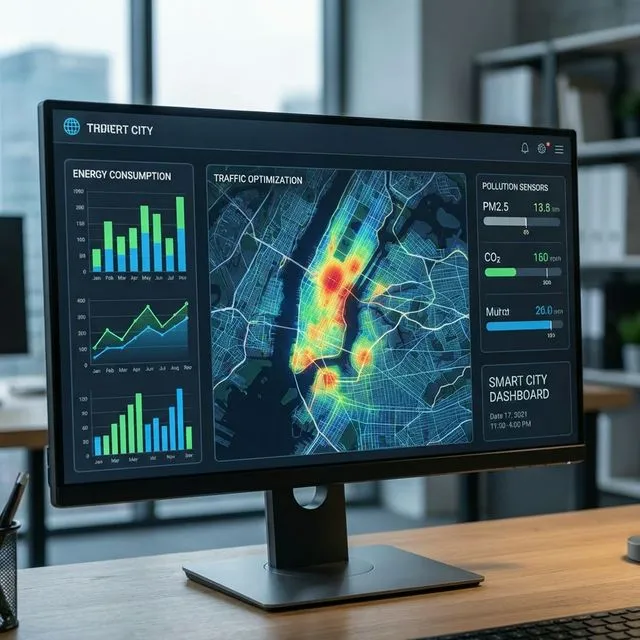
We were commissioned to architect and deploy a unified IoT Smart City Platform. This "System of Systems" integrates data from over 50,000 sensors—traffic cameras, air quality monitors, smart streetlights, and connected waste bins—into a real-time command center.
The impact was immediate and measurable: a 25% reduction in municipal energy consumption, a 30% improvement in peak-hour traffic flow, and a 15% decrease in operational costs for waste management.
The Challenge
The Data Silo Problem
NeoVeridia didn't lack data; they lacked intelligence.
- Departmental Walls: The Traffic Department used System A, the Energy Department used System B, and Sanitation used System C. There was no cross-talk.
- Example Failure: If a major sporting event caused a traffic jam, the streetlights didn't know to stay bright longer for pedestrians, and air quality sensors couldn't trigger traffic diversion protocols to reduce smog in the area.
Infrastructure Scalability
The city planned to deploy 10,000 new sensors per year. The existing on-premise servers would crash under the ingestion load of terabytes of telemetry data per day.
Cyber Security
Connecting critical infrastructure to the internet introduces massive risk. A hacked traffic light system could cause accidents; a compromised power grid could cause chaos. Security had to be "baked in," not bolted on.
The Solution
We built a cloud-native, event-driven IoT platform capable of ingesting high-velocity data, processing it at the edge, and delivering actionable insights to city managers and citizens alike.
Core Components
1. The Sensor Network (Edge Layer)
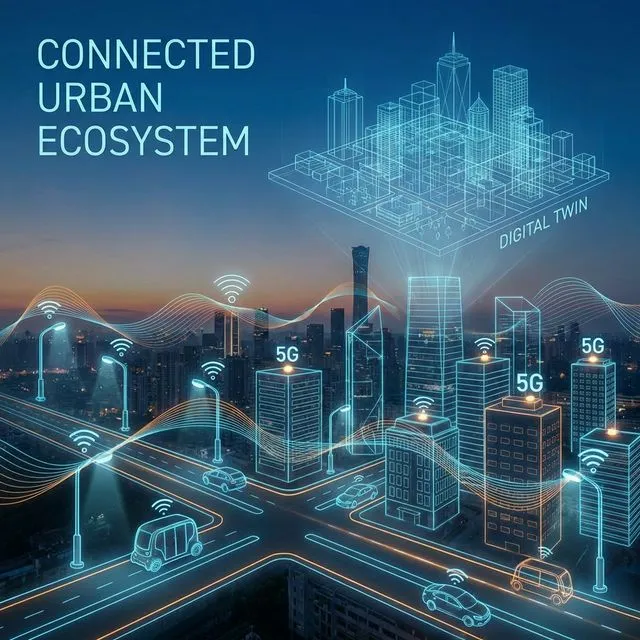
We deployed a Heterogeneous Mesh Network combining LoRaWAN (for low-power sensors like waste bins) and 5G (for high-bandwidth video feeds).
// Edge processing pipeline on NVIDIA Jetson
interface SensorReading {
  deviceId: string;
  type: 'traffic' | 'air_quality' | 'waste' | 'lighting';
  timestamp: number;
  payload: Record<string, number>;
}

class EdgeProcessor {
  private readonly mqtt: MqttClient;
  private readonly model: TensorFlowLite;

  async processVideoFrame(frame: Buffer): Promise<void> {
    // Run inference locally — don't send raw video to cloud
    const detections = await this.model.detect(frame);

    const metadata: SensorReading = {
      deviceId: this.deviceId,
      type: 'traffic',
      timestamp: Date.now(),
      payload: {
        car_count: detections.filter(d => d.class === 'car').length,
        pedestrian_count: detections.filter(d => d.class === 'person').length,
        avg_speed: this.calculateAvgSpeed(detections),
      },
    };

    // Send only metadata (< 200 bytes vs 5MB raw frame)
    await this.mqtt.publish(
      `city/${this.zone}/traffic`,
      JSON.stringify(metadata),
      { qos: 1 }
    );
  }
}
- Edge Computing: We installed NVIDIA Jetson modules on traffic poles. Instead of sending raw video to the cloud (expensive and slow), the AI model on the edge processes the video locally, counts the cars, and sends just the metadata. This reduced bandwidth by 99.7% compared to raw video streaming.
2. The Data Lakehouse (Cloud Layer)
We utilized Snowflake as the central repository, supporting both structured sensor readings and semi-structured logs.
- Real-Time Ingestion: Amazon Kinesis acts as the firehose, buffering millions of events before they are written to storage.
- Digital Twin: We created a 3D Digital Twin of the city using Unity. City planners can run simulations: "What happens to traffic flow if we close 3rd Avenue for repairs?" The simulation runs on historical data to provide accurate predictions.
3. Intelligent Action Engine
The platform isn't just a dashboard; it's an automation engine.
- Adaptive Traffic Control: The system adjusts traffic light timing in real-time based on density. Green waves are created for emergency vehicles (ambulances/fire trucks) detected via GPS.
- Smart Lighting: Streetlights dim to 30% when no motion is detected and brighten to 100% when a pedestrian or car approaches, saving massive amounts of energy.
Citizen Engagement
A smart city must serve its citizens. We launched the "MyNeo" Mobile App.
- Transparency: Citizens can see real-time air quality maps and energy usage stats.
- Reporting: Users can snap a photo of a pothole or a broken light. The app uses GPS and image recognition to automatically categorize the issue and create a work order for the maintenance crew.
Technical Architecture
Backend: Node.js & Go
- Device Management Service: Written in Go, this service handles the provisioning, heartbeat monitoring, and firmware updates (OTA) for 50,000 devices.
- API Gateway: A GraphQL API allows different stakeholders (City Hall, Police, Public) to query the data they need with granular permission levels.
Security Framework
- Mutual TLS (mTLS): Every sensor has a unique X.509 certificate. Communication between the device and the cloud is encrypted and mutually authenticated.
- Network Segmentation: The IoT network is physically air-gapped from the city's internal administrative network to prevent lateral movement in case of a breach.
Impact & Results
The Smart City Platform has made NeoVeridia a global case study for urban innovation.
Environmental Wins
- CO2 Reduction: Optimized traffic flow reduced vehicle idling time, lowering urban carbon emissions by 12%.
- Energy Efficiency: Intelligent street lighting cut the electricity bill by $2.4M annually.
Quality of Life
- Commute Times: The average commuter saves 20 minutes per day due to adaptive traffic signals.
- Safety: Crime rates in parks dropped by 18% after the installation of motion-activated lighting and gunshot detection sensors.
- Response Time: Emergency vehicle average response time decreased from 8.2 to 5.1 minutes (38% improvement) thanks to green wave preemption.
Lessons Learned
- Edge computing is not optional for IoT — Sending raw sensor data to the cloud is prohibitively expensive and slow. Processing at the edge and sending only metadata reduced our cloud costs by 85% and latency by 95%.
- mTLS at scale requires automation — Managing 50,000 certificates manually is impossible. We built an automated CA (Certificate Authority) that provisions, rotates, and revokes certificates based on device lifecycle events.
- Digital Twins pay for themselves — The Unity-based city simulation saved an estimated €3.2M in "trial and error" infrastructure changes by letting planners test scenarios virtually before physical deployment.
Future Roadmap
- V2X (Vehicle-to-Everything): Preparing the infrastructure to talk directly to autonomous vehicles, broadcasting signal phases and road hazard warnings.
- Predictive Maintenance: Using vibration sensors on bridges and tunnels to predict structural failures months before they happen.
- Water Management: Rolling out smart water meters to detect leaks in the subterranean pipe network, which currently loses 15% of potable water.
Conclusion
A smart city is not about technology; it's about people. By weaving intelligence into the fabric of NeoVeridia, we've created an environment that is more responsive, sustainable, and enjoyable for every resident. This project proves that with the right architecture, a city can "think."
Technologies Used: Node.js, Go, LoRaWAN, 5G, NVIDIA Jetson (Edge AI), Snowflake, Unity (Digital Twin), GraphQL, Docker, Terraform.